

Business Interruption Insurance

Competitive pricing with our Price Promise
Monthly payment option available
Easy and professional claims support

Independent feedback based on verified reviews

Compare Quotes
From multiple insurers

Save Time
Buy online in minutes

Save Money
Switch and save

Instant Cover
Delivered to your inbox

Compare Quotes
From multiple insurers
Save Time
Buy online in minutes
Save Money
Switch and save
Instant Cover
Delivered to your inbox
Get quotes from our trusted insurance partners:













What is Business Interruption insurance?
Business Interruption covers loss of income following an interruption to your business following an insurable event, such as a fire or property damage. It’s designed to help your business recover by paying ongoing expenses or increased operating costs, such as wages or rent. Business Interruption is optional cover available in a Business Insurance Package.
Many small business owners like to prepare for unexpected events by insuring their premises, contents or stock. Protecting your business against unplanned closures may be just as important. Events such as fire, storm damage, or theft could lead to major losses and make it impossible for you to do business normally. Business Interruption insurance helps cover lost income and operational costs if you are forced to temporarily close your doors due to an unexpected event.

What does Business Interruption insurance cover?


Lost Income
Loss of turnover due to damage to your own premises as a result of an insured event.
Ongoing Expenses
Wages, taxes, loan payments and other bills that don’t stop just because your business has.
Additional costs of working
Rent on a temporary premises and other additional costs you might incur while you get back to business as usual.
- Undocumented income
- Losses beyond the indemnity period
- Losses due to labour strikes and changes in legislation
Let’s cover your small business on the go
Start a quote to see how much you can save and buy online in minutes.
Who needs Business Interruption insurance?
Most businesses have ongoing operating costs, even if they are unable to generate revenue. Businesses of any size may benefit from Business Interruption insurance to ensure they can keep trading after an unplanned interruption. We offer Business Interruption cover for a wide range of industries, including:

- Cafes
- Restaurants
- Takeaway Shops
- Food Trucks
- Catering
- Bed and Breakfast Operations
- Hotel Operations
- Sporting Clubs & Associations

- Convenience Stores
- Supermarkets
- Butchers
- Markets & Stalls
- Clothing Retailers
- Gift Shops
- Bakers
- Florists

- Cabinet Makers
- Electronic Goods
- Clothing Manufacturing
- Fabricated Metal Products
- Welding Services
- Processed Food
- Candle Manufacturing
- Jewellery Manufacturing
Tailor your Business Interruption cover to your needs.
Here are some key things to consider when choosing a Business Interruption policy.
- Indemnity period – The maximum period that you can claim from your insurer for disruption to your business. You can typically choose 6-, 12-, or 24-months of Business Interruption cover.
- Waiting periods – The amount of time before you can claim benefits. Generally, shorter waiting periods come with higher premiums.
- Policy limits – The maximum amount you can claim for.
- Insured events – The types of events that are covered by your policy. These may include things such as fire, burglary, or storm damage, through your policy wording will have a full list.
- Exclusions – Events which are not covered by your policy. Your policy wording will specify what is not covered for your business.
- Your business needs and growth – Calculating your business’ gross profit can help you choose a policy limit that fits your unique needs. If your business is growing, you may want to take this into account when choosing the amount of cover you take.
How is the cost of insurance calculated?

Business location
Cover level amount
Annual turnover
Number of employees
Claims history
Get cover that works with the risks of your business
You can select from different levels of cover.
This is the most you will be paid out if you need to make a claim. Choosing different cover levels may impact the cost of your policy.
Flexible Cover
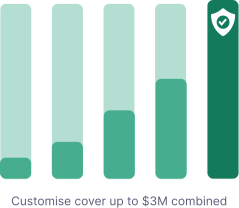
Up to $3M of cover for Contents, Building, and Business Interruption (combined)
Unsure how much to choose? Think about:
How long cover should last if you make a claim
Your operating costs
Your revenue
Worst case scenario claim size
Underinsurance
We know it’s tempting to select a lower level of cover to reduce premiums, but this can leave businesses shocked and insufficiently covered when making a claim.
Ways underinsurance catches business owners out:
Inflation
With inflation, the cost of living and doing business increases. Remember to over yourself, your tools and assets for the rising costs of replacing or covering them, not what you paid for them – you may be surprised at the difference.
Not covering the full cost of your risks
If you select cover levels for less than the value you may be found liable – left out of pocket when it comes to claims time. It’s important to review your risks and determine how much you will need to cover any claim that may come your way.
How much does Business Interruption insurance cost?
Business Interruption insurance costs can vary based on the indemnity period, business size and other factors. Every business is unique, and so is the type and cost of its policy.
How is the cost of insurance calculated?
Business location
Cover level amount
Annual turnover
Number of employees
Claims history
Get cover that works with the risks of your business
You can select from different levels of cover.
Choosing different cover levels may impact the cost of your policy.
Flexible Cover
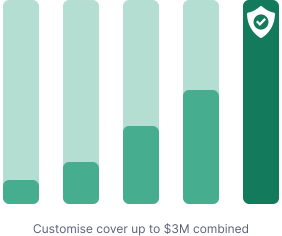
Up to $3M total combined cover value for contents Contents, Building, and Business Interruption policies
Unsure how much to choose? Think about:
How long cover should last if you make a claim
Your operating costs
Your revenue
Worst case scenario claim size
Underinsurance
We know it’s tempting to select a lower level of cover to reduce premiums, but this can leave businesses shocked and insufficiently covered when making a claim.
Ways underinsurance catches business owners out:
Not covering the full cost of your risks
If you select cover levels for less than the value you may be found liable – left out of pocket when it comes to claims time. It’s important to review your risks and determine how much you will need to cover any claim that may come your way.
How is the cost of insurance calculated?
Business location
Cover level amount
Annual turnover
Number of employees
Claims history
Get cover that works with the risks of your business
You can select from different levels of cover.
This is the most you will be paid out if you need to make a claim. Choosing different cover levels may impact the cost of your policy.
Flexible Cover
Up to $3M of cover for Contents, Building, and Business Interruption (combined)
Unsure how much to choose? Think about:
How long cover should last if you make a claim
Your operating costs
Your revenue
Worst case scenario claim size
Underinsurance
We know it’s tempting to select a lower level of cover to reduce premiums, but this can leave businesses shocked and insufficiently covered when making a claim.
Ways underinsurance catches business owners out:
Inflation
With inflation, the cost of living and doing business increases. Remember to over yourself, your tools and assets for the rising costs of replacing or covering them, not what you paid for them – you may be surprised at the difference.
Not covering the full cost of your risks
If you select cover levels for less than the value you may be found liable – left out of pocket when it comes to claims time. It’s important to review your risks and determine how much you will need to cover any claim that may come your way.
How It Works – Buying Online
5 easy steps to get instant cover online today

Select Profession

Pick Your Covers

Add Business Details

Compare Quotes

Get Covered Online
5 Steps to get your biz insured:

- Enter Occupation
Search & select your occupation


- Choose Cover(s)
Select the cover you need

- Business Details
Tell us about your business

- Compare Quotes
Compare prices & select quotes
- Get Cover Today
Instant policy docs to your inbox.
How To Make a Claim Online
We’ll assist you through the claims process & manage the claim directly with the insurer.
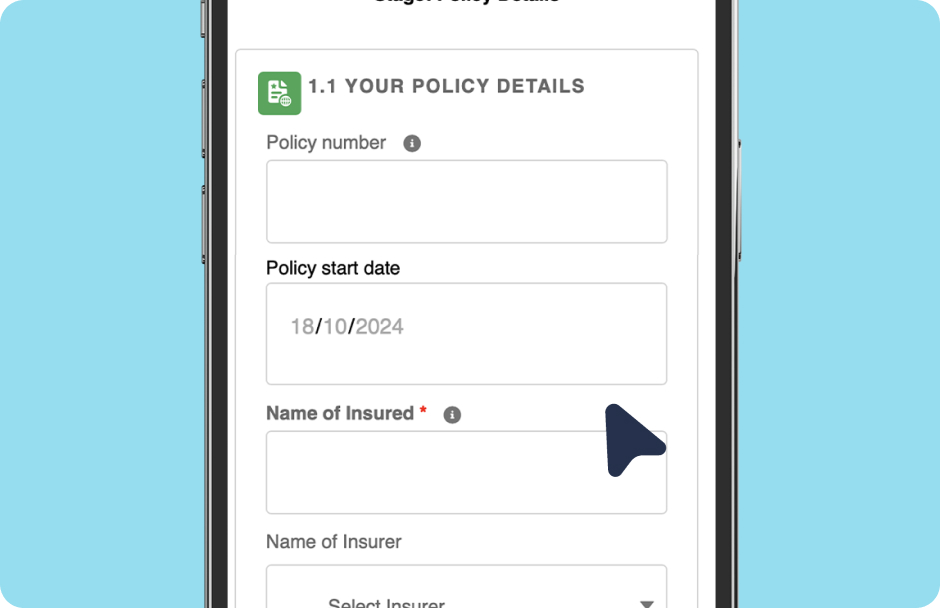
Let us know Fill out our
claims form and provide info
to support the claim
Receive extra support We
will assist you with your claim
Claim results We will notify
you of the claim outcome.
3 steps to get your biz insured:
- Let us know
Fill out our claims form and provide info to support the claim.
- Receive Extra Support
We’ll assist you with your claim.
- Claims Results
We’ll notify you of the claim outcome.

Award-Winning Tech & People
We’re not ones to blow our own trumpet, but we are pretty proud of our innovative insurance platform, outstanding team, and stellar workplace.
Claim example
A café owner was notified by their state’s health authority that a member of her staff who had been on site was diagnosed with typhoid. The café was ordered to cease trading and all staff, including the café owner, needed to be tested to continue trading. Due to the incident, the café suffered a four-day downturn in sales.
The café owner made a claim with her Business Insurance Package insurer. The insurer covered the claim under the Business Interruption portion of the policy and paid $3,738 to cover her loss.
The provision of the claims examples are for illustrative purposes only and should not be seen as an indication as to how any potential claim will be assessed or accepted. Coverage for claims on the policy is determined by the insurer, and not BizCover.
See How Much Others Have Saved By Purchasing a Policy Through BizCover
Colette
Disability Care Worker from
NSW
Saved
$1,200
on
Public Liability and Professional Indemnity insurance

Andrea
Beautician from
VIC
Saved
$1,500
on
Business insurance Pack and,
Public Liability and Professional Indemnity insurance

Deborah
Cleaner from
VIC
Saved
$3,600
on
Public Liability insurance

Lance
Electrician from
ACT
Saved
$800
on
Public Liability insurance

Stephen
IT Professional from
VIC
Saved
$1,500
on
Information Technology Liability insurance

Linda
Restaurant owner from
NSW
Saved
$1,000
on
Business Insurance Pack and
Public Liability insurance

^ Savings made from January 2024 to April 2025. This information is provided as a guide only and may not reflect pricing for your particular business, as individual underwriting criteria will apply.
Frequently asked questions
Consider how long you could potentially be out of business and still pay your operating costs—think employee wages, loan repayments, and other bills that don’t stop just because you’re unable to trade.
This will help determine the ‘indemnity period’, aka the period of time you wish to insure your business for loss of turnover. Small business owners often underestimate how long it can take to get their business back up and running following a major insured event.









Real-life customer reviews verified by Feefo