

Cyber Liability Insurance
Flexible payment options – monthly or annually

Quick to quote – No tech know-how required
Cover for data loss, extortion, regulatory investigations, and reputational damage
Cover limits up to $2 million

Independent feedback based on verified reviews

Compare Quotes
From multiple insurers

Save Time
Buy online in minutes

Save Money
Switch and save

Instant Cover
Delivered to your inbox

Compare Quotes
From multiple insurers
Save Time
Buy online in minutes
Save Money
Switch and save
Instant Cover
Delivered to your inbox
Get quotes from our trusted insurance partners:













On this page:
What is Cyber Liability Insurance?
Cyber Liability insurance (also known as Cyber Insurance) can help you manage many types of cybercrime (like cyberattacks, ransomware, and data breaches) by covering legal costs, data recovery, fines and penalties, and other expenses related to the cyber event.
Many everyday business activities—like sending emails, using social media, storing data on the cloud, and accepting EFTPOS payments—could put you at risk of a cyberattack. Cyber Insurance helps protect your business against the cost of cyber incidents and can connect you with support after an attack.
BizCover offers Cyber Insurance options that help sole traders and growing businesses protect themselves against fast-changing cyber risks. Our policies include first-party and third-party cover.

43% of Aussie small businesses encountered a cyber threat last financial year.
Read more about the cyber risks businesses are facing every day.
What does Cyber Insurance cover?
Cyber Insurance covers costs related to a cyber incident, including business interruption, investigation, data recovery, crisis management, and legal fees.


Data breaches
Incidents where business or customer data is stolen or accessed illegally.

Phishing and Cyberattacks
Covers financial loss from cybercrime, such as phishing, social engineering, and payment redirection fraud (up to the sublimit set by the insurer). Limits from $50k to $2 million (based on cybercrime type and insurance partner)

Cyber extortion
Responding to ransomware threats where systems or data are held hostage. Limits up to $2 million.

System and data restoration
Costs to recover lost or damaged data and restore affected software or systems after a covered cyber incident. Limits up to $2 million.

Incident response
Assistance and services to handle, contain, and recover from a cyberattack or data breach. Limits up to $2 million; emergency incident response up to $50k.

Forensic investigations
Costs of hiring computer forensic experts to investigate the cause and size of a breach.

Business interruption
Covers lost income and certain additional expenses if a business is unable to trade as normal due to a covered cyber incident (subject to applicable waiting periods). Limits up to $2 million.

Customer notifications
Covers the cost of notifying customers that their personally identifiable information (PII) was lost or stolen.

Legal costs
Legal costs to defend a claim brought against you after a data or network security breach, plus certain regulatory fines and penalties where they are insurable at law. Limits up to $2 million.

Post-incident consulting services
Limited post-incident cyber security costs to help reduce the risk of future cyber events.

Crisis Management
Certain costs for specialist support, such as public relations, legal advice and incident response, following a covered cyber incident.
Cyber Insurance generally does not cover losses that result from physical damage, bodily injury, or intentional human errors, such as:
- Bodily injury or property damage.
- Certain intellectual property infringement claims
- Damage caused by natural disaster
- Physical damage to computer hardware (some insurers cover limited repair or replacement after a covered event)
- Intentional or fraudulent acts
- Prior known facts or circumstances
Why do I need Cyber Insurance?
Business may need Cyber Insurance to meet legal obligations or contract terms, especially if you are working with certain clients or in regulated industries.
Most businesses today rely on technology to run their business. Unfortunately, the many systems, software, and apps used could also leave you vulnerable to cyber risks, like data breaches and ransomware attacks.
Cyberattacks can be expensive—the average cost of cybercrime for small businesses is $56,600 (ASD 2024-25 Annual Cyber Threat Report). They can also disrupt normal trading, take time away from running the business, and damage your reputation with customers, clients, and suppliers. Cyber Insurance can help cover the cost of a cyberattack or data breach. It can also connect you with IT services to help contain the damage and get you back to business as usual, faster.

Meet legal and contractual obligations
Respond to a cyber breach
Recover after a cyberattack
Pay legal costs after a data breach
Common cyber scenarios for small businesses
Cyberattacks, hacks, and breaches typically don’t look like they do in movies and on TV. Here are some everyday examples of what they look like in real life:
| An employee accidentally clicks a dodgy email link |
| You pay an invoice from a service provider, only to later discover it was a clever fake |
| Someone unknowingly downloads ransomware, and you are locked out of your systems |
| Customer data is exposed when your login details are stolen |
| You accidentally send sensitive information to the wrong client |
| Your email and social media accounts are hacked and fake offers are sent to your customers |
| Your third-party payment services suffers a cyberattack that exposes your customers’ payment details |
Who needs Cyber Liability insurance?
Cyber Insurance is not mandatory for most small businesses, but it is important to consider your cyber risks. Small businesses and sole traders are easy and popular targets for cybercriminals and could benefit from having Cyber Insurance. Industries that commonly buy Cyber Insurance policies, include:

- Management Consultants
- Education Consultant
- Communications Consultants
- Human Resources Consultants
- Business Coaching
- Environmental Consultants
- Content Writers


- Nurses
- Aged Care Support Workers
- Chiropractors
- Occupational Therapists
- Physiotherapists
- Disability Plan Management
- Disability Care
Don’t see your industry or occupation? We cover thousands of occupations across Australia.
How much does Cyber Liability insurance cost?
Cyber Liability insurance costs an average of $110 per month*.
How is the cost of insurance calculated?

Cover limits
Risk management
Data sensitivity
Business size / number of employees
Claims history
*BizCover’s Marketing Pricing Expectations Report is based on 1 July 2025 to Jun 2026 and presented as a guide only. It may not reflect pricing for your particular business, as individual criteria will apply.
Click here to check industry wise average prices
Get cover that grows with your business
With BizCover, you can choose flexible Cyber Insurance limits up to $2 million to fit your business needs.
Unsure how much to choose? Think about:
Statutory professional requirements
Cover required by contracts
Number of employees being covered
Your contract value
Worst case scenario claim size
Underinsurance
We know it’s tempting to select a lower level of cover to reduce premiums, but this can leave businesses shocked and insufficiently covered when making a claim.
Ways underinsurance catches business owners out:
Not covering the full cost of your risks
If you select cover levels for less than the value you may be found liable – left out of pocket when it comes to claims time. It’s important to review your risks and determine how much you will need to cover any claim that may come your way.
How is the cost of insurance calculated?
Cover limits
Risk management
Data sensitivity
Business size / number of employees
Claims history
*BizCover’s Marketing Pricing Expectations Report is based on 1 July 2025 to Jun 2026 and presented as a guide only. It may not reflect pricing for your particular business, as individual criteria will apply.
Click here to check industry wise average prices
Get cover that grows with your business
With BizCover, you can choose flexible Cyber Insurance limits up to $2 million to fit your business needs.
Unsure how much to choose? Think about:
Statutory professional requirements
Cover required by contracts
Number of employees being covered
Your contract value
Worst case scenario claim size
Underinsurance
We know it’s tempting to select a lower level of cover to reduce premiums, but this can leave businesses shocked and insufficiently covered when making a claim.
Ways underinsurance catches business owners out:
Inflation
With inflation, the cost of living and doing business increases. Remember to over yourself, your tools and assets for the rising costs of replacing or covering them, not what you paid for them – you may be surprised at the difference.
Not covering the full cost of your risks
If you select cover levels for less than the value you may be found liable – left out of pocket when it comes to claims time. It’s important to review your risks and determine how much you will need to cover any claim that may come your way.
How It Works – Buying Online
5 easy steps to get instant cover online today

Select Profession

Pick Your Covers

Add Business Details

Compare Quotes

Get Covered Online
5 Steps to get your biz insured:

- Enter Occupation
Search & select your occupation


- Choose Cover(s)
Select the cover you need

- Business Details
Tell us about your business

- Compare Quotes
Compare prices & select quotes
- Get Cover Today
Instant policy docs to your inbox.
How To Make a Claim Online
We’ll assist you through the claims process & manage the claim directly with the insurer.
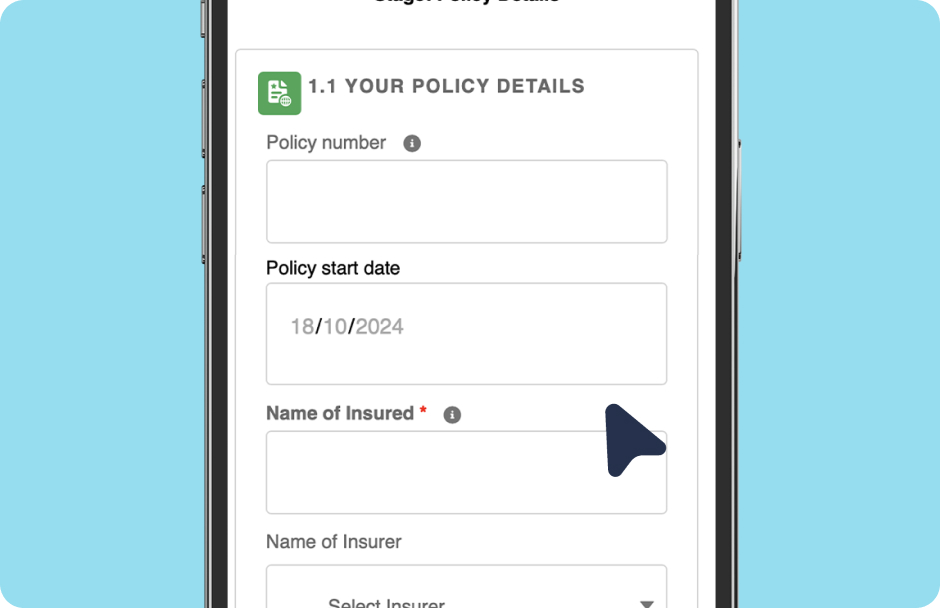
Let us know Fill out our
claims form and provide info
to support the claim
Receive extra support We
will assist you with your claim
Claim results We will notify
you of the claim outcome.
3 steps to get your biz insured:
- Let us know
Fill out our claims form and provide info to support the claim.
- Receive Extra Support
We’ll assist you with your claim.
- Claims Results
We’ll notify you of the claim outcome.

Award-Winning Tech & People
We’re not ones to blow our own trumpet, but we are pretty proud of our innovative insurance platform, outstanding team, and stellar workplace.
Cyber Liability claim scenario

An insured hairdresser used a VoIP phone system for their business. A hacker gained access to this phone system and made multiple unauthorised calls to a premium number over the course of a month, an attack known as “phreaking”. At the end of the month, the hairdresser received a huge shock when they saw their phone bill included $30,000 of unauthorised calls.
The hairdresser held Cyber Liability insurance which included optional Social Engineering cover. They were covered for $30,000 of direct financial loss as a result of the phreaking attack.
The provision of the claims examples are for illustrative purposes only and should not be seen as an indication as to how any potential claim will be assessed or accepted. Coverage for claims on the policy is determined by the insurer, and not BizCover.
See How Much Others Have Saved By Purchasing a Policy Through BizCover
Colette
Disability Care Worker from
NSW
Saved
$1,200
on
Public Liability and Professional Indemnity insurance

Andrea
Beautician from
VIC
Saved
$1,500
on
Business insurance Pack and,
Public Liability and Professional Indemnity insurance

Deborah
Cleaner from
VIC
Saved
$3,600
on
Public Liability insurance

Lance
Electrician from
ACT
Saved
$800
on
Public Liability insurance

Stephen
IT Professional from
VIC
Saved
$1,500
on
Information Technology Liability insurance

Linda
Restaurant owner from
NSW
Saved
$1,000
on
Business Insurance Pack and
Public Liability insurance

^ Savings made from January 2024 to April 2025. This information is provided as a guide only and may not reflect pricing for your particular business, as individual underwriting criteria will apply.
Frequently asked questions
Cyber Liability insurance covers your business’ liability following a data breach and cyberattack. Your policy may pay costs related to business interruptions or downtime, investigations, customer notification, legal fees, and some fines and penalties.
Examples of cyberattacks and incidents that Cyber Insurance may cover, include:
• Phishing
• Business email compromise (BEC)
• Data breaches
• Malware and ransomware
• False billing scams / invoice manipulation
• Fund transfer fraud
• System hacks
Always check your policy wording to understand what types of cyber incidents and attacks are covered by your policy.
Yes, Cyber Insurance generally covers incident response. Depending on the policy, this may include forensic investigation, legal advice, customer notification, and PR-related costs.
Yes. Cyber Insurance may cover remote workers, employees working from home, and “bring your own device” work situations. Always check your policy wording to understand which devices, systems, and networks are covered.
A single cyber incident can cost a small business approximately $49,600. However, the fallout from a cyberattack is not just financial. It may also cause reputational damage to a business as well. The Office of the Australian Information Commissioner found that 47% of people surveyed said they would stop using a service if their data was involved in a breach. Many Australians place a high level of importance on their privacy when choosing a product or service, with 70% saying it is extremely or very important.
Cyber Liability insurance is not a legally mandatory form of insurance in any industry. However, if you are a contractor, your employer may wish to know what kind of insurance policies you hold before they agree to work with you.
Having a cybersecurity plan may be a policy condition or insured obligation of your Cyber Insurance policy. Some insurance partners may require policy holders to take reasonable measures to protect and maintain their systems and backup data regularly.
Yes, Cyber Insurance policies typically have a deductible (also called an excess). This is the out-of-pocket amount you must pay before your insurer will pay a claim. You may be able to select your excess level when setting up your policy.
The main difference between data breach and Cyber Liability insurance is what each policy covers.
Data breach insurance focuses strictly on data exposure. It typically covers forensic investigations, notifying affected customers, and public relations. Cyber Liability insurance offers broader cover. In addition to the cover provided by data breach insurance, Cyber Liability can also cover ransomware demands, business interruption costs, and system and data restoration.
(Please note: BizCover does not offer standalone data breach insurance at this time.)
Yes, business insurance premiums (including those for a Cyber Liability policy) may be deducted as an operating expense. Always check the ATO website or consult with a tax professional to understand your allowable deductions.
First-party cover helps manage direct costs to the covered business, such as business interruptions and investigations into the cause of the cyber incident. Third-party cover applies to customers or regulators who bring claims following a privacy breach.
BizCover Cyber Insurance policies provide both first-party and third-party cover, though exact cover varies between insurance partners. Always check your policy wording to understand when you are and are not covered.
More types of cover








Hear from our customers


Quick and easy, Took the hassle out of shopping around and comparing

A Tempany
Easy to use and beat my current insurance quote by a long shot- happy.
Thomas T
Thank you for the quick and very helpful phone call, big thumbs up to the wonderful gentlemen that took my call.
Precilla T
Awesome and saved me $100 a month
Chrisptopher B
Great service, every single question of mine was answered to 100% satisfaction, keep it up mate.
Satpal S



Real-life customer reviews verified by Feefo