


Balancing the Scales: Why Gender Equity Still Matters in 2026
International Women’s Day, celebrated each year on 8 March, is a global day of recognition, reflection and action. It acknowledges the social, economic, cultural and political achievements of women, while also shining a light on the work still to be done to achieve gender equality.
In Australia, International Women’s Day is both a celebration and a call to action.
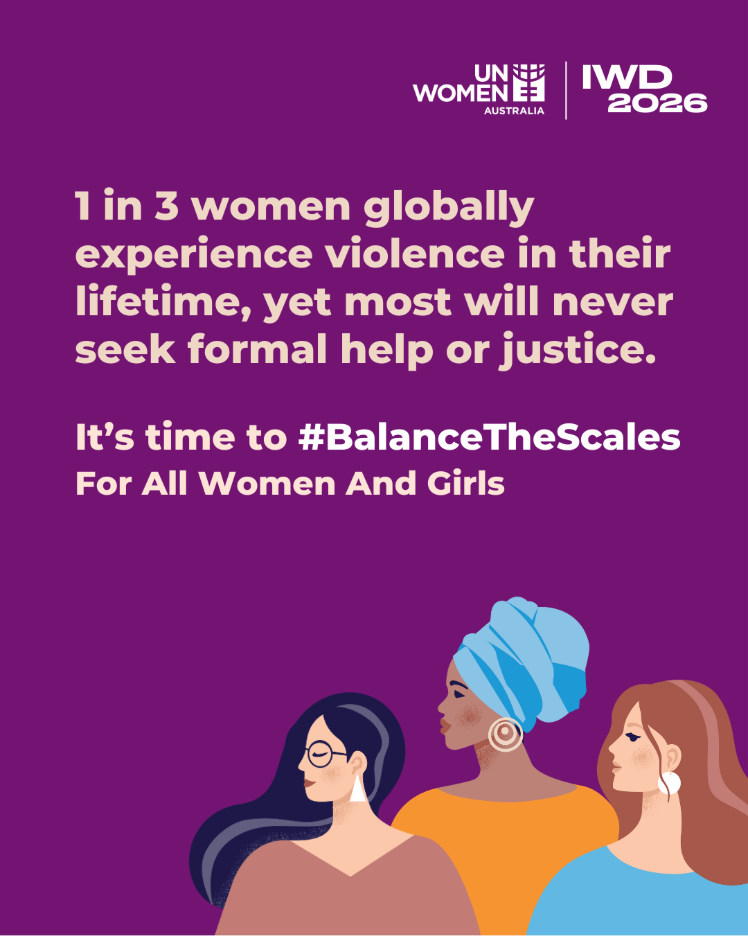
This year’s theme, “Balancing the Scales,” speaks directly to the inequalities that persist for women and girls in Australia and around the world. It is a call to address the systemic barriers that limit opportunity, restrict access to justice and create unfair outcomes.
“International Women’s Day is an important reminder to recognise how far we’ve come, while continuing to advocate for workplaces that genuinely support women through every stage of their career,” says Saragina Khochaba, Risk and Compliance Manager at BizCover.
Summing up this year’s theme succinctly, BizCover’s Head of Marketing and Partnerships, Sharon Kenny, adds, “Balancing the scales goes to the heart of what equality really means.”
Why making progress on gender equity is important
The reason International Women’s Day is an important global event is because the need for progress remains urgent.
Even in industrialised countries like Australia, discrimination and imbalance persist. The Australian Bureau of Statistics recorded that there were 40,087 victims of sexual assault in 2024, and women were the vast majority of victims (81%).
In addition to this, Australia is still battling to close the gender pay gap. Currently, according to research by the Women’s Gender Equality Agency (WGEA), the national gender pay gap for total remuneration stands at 21.1%. This means that for every $1 a man makes, a woman will make 79 cents. This adds up to $28,356 over the course of a year.
The gender pay gap is slowly decreasing (in 2023-24 it was 21.8%), but there is still much work to be done.
The business case for gender equity
Yes, it’s true: Diversity, equity and inclusion is good for business.
Workplaces that prioritise fairness and representation are more innovative, more resilient and better positioned to grow. Considering this, diversity, equity and inclusion (DE&I) policies do not simply exist because they are socially responsible, but because they can impact a company’s profitability and longevity.
In fact, businesses that have greater representation of women are found to have an 18% financial advantage over others with less diversity.
But representation isn’t only about financial performance. It’s also about visibility and opportunity.
Larissa Viana first started at BizCover more than three years ago as a Customer Care Agent. Today, she is a Team Leader in the Retention Team. She believes that representation in leadership creates a ripple effect throughout an organisation.
“Having women in leadership roles is important,” says Larissa. “It can help to inspire other women to aim higher.”
Larissa says her favourite part of her new role is training and coaching new agents. “I always try to lead by example,” she says.

Reality versus belief
Our Watch (Australia’s leader in the primary prevention of violence against women) released data last year that showed plenty of myths still exist when it comes to gender equality in the workplace.
The data revealed a clear perception gap. Twice as many male employees (54%) as female employees (25%) believe women have the same opportunities in Australian workplaces.
When presented with the statement: “Discrimination against women is no longer a problem in the workplace in Australia,” 50% of male respondents agreed while 77% of female respondents disagreed.
BizCover Data Engineer, Hema Raju, feels that this gap between perception and reality can be subtle but highly impactful – particularly for working mothers navigating career progression after time away.
“When I came back from maternity leave, BizCover gave me a flexible work option where I was able to work from home for a couple of months until I was settled. That really helped me to balance work as well as my personal life,” she says. “I haven’t seen that [in any other workplace]. Every workplace should be willing to adapt to and support women returning from their maternity break.”
Hema also mentions the discrimination that mothers sometimes face when returning to the workforce. “A break on your resume can sometimes be seen as a red flag,” she says. “This needs to change.”
This stigma can limit opportunities for full-time roles, leadership pathways and pay progression.
The cost of caring responsibilities
In many female/male family households, women take on the majority of caring responsibilities. In Australia, 7 out of 10 primary carers are women (71.8%). Women are also more likely to reduce their working hours or step away from paid employment entirely to care for children, elderly parents or family members with disability. Time out of the workforce often means lost income, missed promotions and slower career progression.
It can also have a massive impact on a woman’s superannuation and her ability to retire comfortably. According to the Super Members Council’s Mind the Gap report, unpaid super affects one in four working women in Australia, costing each affected working woman an average of $1,300 in super contributions each year. In 2022–23, women missed out on a total of $1.9 billion in super contributions.
Reflecting on what Australian busineses could do to better help support women, Sharon believes that flexibility is key. “BizCover is good at this, but I do see women in other businesses really struggle with [arranging] flexible work,” she says. “I think we also need to make [flexible working] the norm, not just for mums, so that there’s no stigma attached to someone who needs to leave at three o’clock or needs to work different hours.”
“It is very difficult for women trying to organise their life when they become a mother,” agrees Larissa. “But I think it’s important to show the world how we can be a mum and a professional. [Women] are capable of so much.”

Real ways to balance the scales in business
Awareness around gender equity is not enough. The gender pay gap still exists, women still report that they do not have the same opportunities as men in the workplace, and mothers often face significant barriers when returning to work. Real progress requires action.
“[Balancing the scales] means not having to choose between career progression and family responsibilities,” Saragina says. “It’s about ensuring that opportunity and support are genuinely equitable.
“Flexibility and career progression can exist side by side.”
For employers committed to balancing the scales and who are not afraid to step up, practical actions can make a measurable difference.
Review and strengthen workplace policies
Review workplace policies through a fairness lens, from recruitment and promotion processes to parental leave and flexible work arrangements. Are opportunities genuinely accessible to everyone? Is your hiring process structured to reduce bias? Clear, consistent and transparent policies are what help to create a level playing field for everyone, regardless of gender, orientation, age or ethnicity.
“I feel every woman, irrespective of where they come from or where they are, should be given equal opportunity and safe spaces to talk and to dream big,” says Hema.
Invest in training and awareness
Even well-intentioned workplaces can fall short without awareness. Regular training on equality, inclusion and unconscious bias helps teams understand how everyday behaviours can contribute to workplace culture. For business owners and leaders, this means building the skills to manage fairly, recognise blind spots and foster inclusive environments.
Create safe reporting and support pathways
A fair workplace is one where people feel safe to speak up.
“It’s important to create a culture where people feel comfortable asking questions or raising concerns early,” says Saragina. “That makes a big difference, and it strengthens trust within the team – whether it’s business-related or personal.”
Establish clear, confidential and accessible reporting mechanisms for issues such as discrimination, harassment or bullying. Just as important is ensuring concerns are taken seriously and addressed promptly. Small businesses may not have large HR teams, but they can still create transparent processes and a culture of accountability that prioritises safety and dignity.
Set measurable goals and track progress
Good intentions are not enough. Progress needs measurement. Set clear, achievable goals around pay equity, representation, leadership development or employee engagement. Track outcomes and be transparent about where you’re succeeding and where you need to improve. Accountability here is important and can help to actually drive change, rather than just making it a talking point.

Ensuring equity for all by balancing the scales
Balancing the scales isn’t about symbolic gestures or one-off initiatives. It’s about building workplaces where fairness is embedded in everyday decisions, from hiring and pay to flexibility and leadership opportunities.
International Women’s Day is a reminder that progress requires intention. Real change happens when organisations commit to practical, measurable action that ensures opportunity, safety and dignity for everyone.
For Larissa, it ultimately comes down to opportunity and belief. “Don’t give up. Challenge yourself and show the world that you can be a leader, you can be a manager, you can be a mother – you can be whatever you want.”
1800RESPECT is the national domestic, family, and sexual violence counselling, information and support service. If you or someone you know is experiencing, or at risk of experiencing, domestic, family or sexual violence, call 1800RESPECT on 1800 737 732, chat online via www.1800RESPECT.org.au, or text 0458 737 732. Men’s Referral Service: 1300 766 491.
This information is general only and does not take into account your objectives, financial situation or needs. It should not be relied upon as advice. As with any insurance, cover will be subject to the terms, conditions and exclusions contained in the policy wording or Product Disclosure Statement (available on our website). Please consider whether the advice is suitable for you before proceeding with any purchase. Target Market Determination document is also available (as applicable). © 2026 BizCover Pty Limited, all rights reserved. ABN 68 127 707 975; AFSL 501769.

![[Press Release] BizCover Adds Zurich Professional Indemnity to its Online Platform](https://www.bizcover.com.au/wp-content/uploads/Untitled-5-5.png)
![[Press Release] BizCover Among Australia’s Best Managed Companies 2025](https://www.bizcover.com.au/wp-content/uploads/Best-Managed-Companies-LI-social-card-template-2025-1-scaled.jpg)
![[Press Release] BizCover Shortlisted for 4 Excellence Awards by Insurance Business Australia in 2026](https://www.bizcover.com.au/wp-content/uploads/Press-Release-BizCover-Shortlisted-for-4-Excellence-Awards-by-Insurance-Business-Australia-in-2026.jpg)



